

Induction Heating Applications
Heating Treatment
Heating treatment is a critical thermal process used to modify the physical and mechanical properties of metals. It is widely applied to enhance hardness, strength, wear resistance, and ductility, while also relieving internal stresses.
This process plays a vital role in industries such as automotive, aerospace, tool manufacturing, and heavy engineering, where material performance directly impacts reliability and efficiency.
What is Heating Treatment?
Heating treatment involves controlled heating and cooling cycles designed to achieve specific metallurgical properties. Each process is carefully tailored based on the material composition and desired outcome.
Common heat treatment processes include:
- Hardening – Increases strength and wear resistance
- Tempering – Improves toughness and reduces brittleness
- Annealing – Enhances ductility and relieves internal stress
- Normalizing – Refines grain structure for uniform properties
- Stress Relieving – Eliminates residual stresses from manufacturing
Key Benefits
- Improved Material Strength & Durability
- Enhanced Wear and Fatigue Resistance
- Optimized Mechanical Performance
- Reduced Internal Stress and Distortion
- Extended Component Lifespan
Applications
Heating treatment is essential for a wide range of industrial components, including:
- Gears and gear teeth
- Shafts and bearing surfaces
- Cutting tools and dies
- Automotive and aerospace components
Induction Heating Treatment Technology
Induction heating has become a preferred method for modern heat treatment due to its:
Rapid and localized heating for precision control
Energy efficiency compared to conventional methods
Minimal distortion of components
Clean and environmentally friendly process
High repeatability for mass production
It is especially effective for surface hardening, allowing specific areas (such as gear teeth or shafts) to be treated without affecting the core material properties.
CEIA Induction Heating Treatment Systems
CEIA’s advanced induction heating systems are engineered for demanding heat treatment applications. These systems offer:
Fast and efficient heating cycles
Precise temperature and power control
Consistent and repeatable performance
Optimized energy consumption
Their flexibility makes them ideal for executing complex heat treatment processes with high accuracy and reliability.
Why Choose Induction Heating Treatment?
Induction heating treatment provides a modern, efficient, and scalable solution for industries that demand:
- High-performance materials
- Precision engineering
- Consistent production quality
Frequently Asked Questions
What is heat treatment and why is it important?
Heat treatment is a controlled process of heating and cooling metals to change properties such as hardness, strength, wear resistance and ductility, without changing the part’s shape. It determines how reliable and durable a component is in service, which is why it’s central to automotive, aerospace, tool manufacturing and heavy engineering.
What are the main types of heat treatment?
The main types are hardening, tempering, annealing, normalizing and stress relieving. Hardening raises strength and wear resistance. Tempering improves toughness and reduces brittleness. Annealing improves ductility and relieves internal stress. Normalizing refines grain structure for uniform properties. Stress relieving removes residual stresses left by machining or welding.
What is the difference between hardening and tempering?
Hardening increases strength and wear resistance but can leave metal brittle, while tempering is applied afterward to restore toughness. Together they give a better balance of hardness and durability. Tempering reduces brittleness at the cost of a small amount of hardness.
What is induction heat treatment and why is it preferred over conventional methods?
Induction heat treatment uses induction heating to deliver rapid, localized heat, so it’s faster, more energy efficient and more repeatable than conventional furnace methods. It causes less distortion, produces no combustion by-products and suits mass production. It’s a common choice for surface hardening of gears, shafts and tools.
What is induction surface hardening, and can it be used on gears?
Induction surface hardening hardens only the outer layer of a part, such as gear teeth or a shaft surface, while the core keeps its original properties. Yes, gears are one of the most common applications. Hardening the tooth surface gives wear resistance, while the tougher core resists impact.
Preferred Products
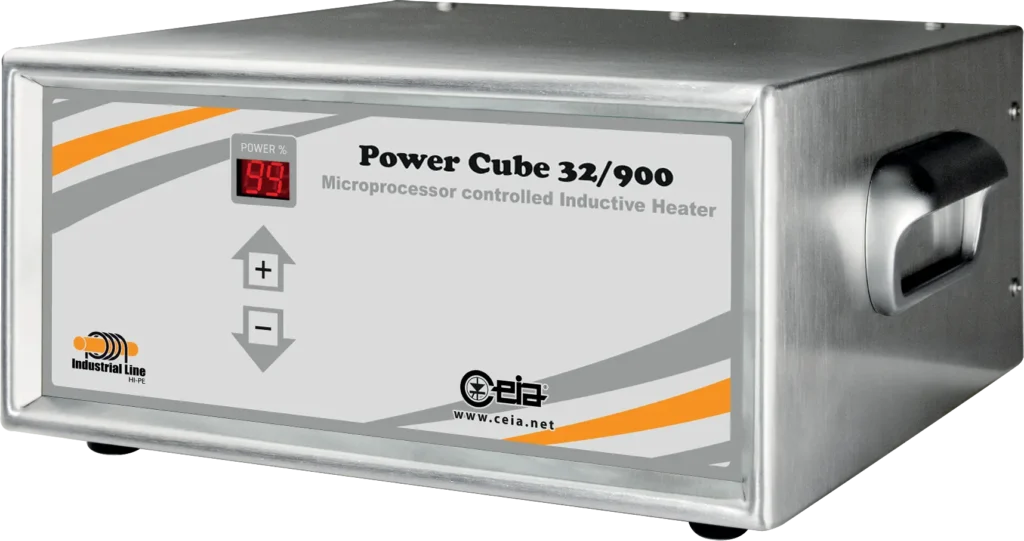
Power Cube Series 900 Generators
The 900 HI-PE series of High Frequency Generators spans five models with a power rating range of 2.8 to 6 kW. They combine the miniaturized CEIA Heating Head solution (patented) with a powerful, continuous-duty rated generator with so high efficiency that it can replace traditional generators in applications up to 12kW, thus cutting the initial investment and operating costs.
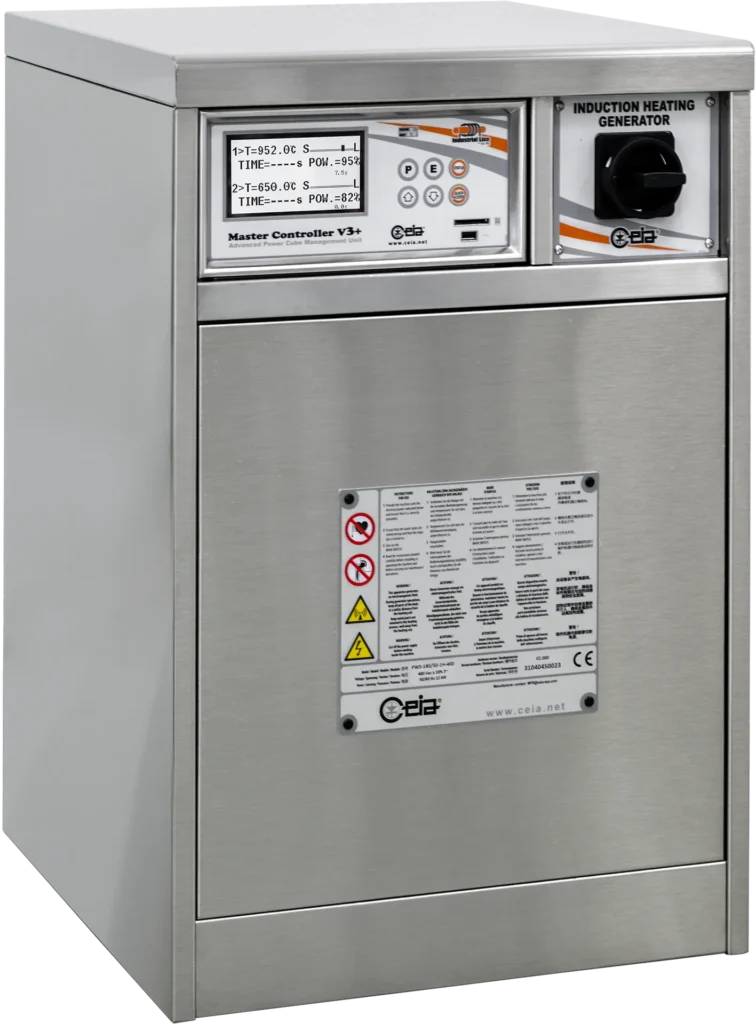
Power Cube Series 200 Generators
The 200 series is the state-of-the-art in medium-high frequency generators available in the market. This family combine the miniaturized CEIA Heating Head solution (patented) with a powerful, continuous-duty rated generator with so high efficiency that it can replace traditional generators in applications up to double input power, thus cutting the initial investment and operating costs.
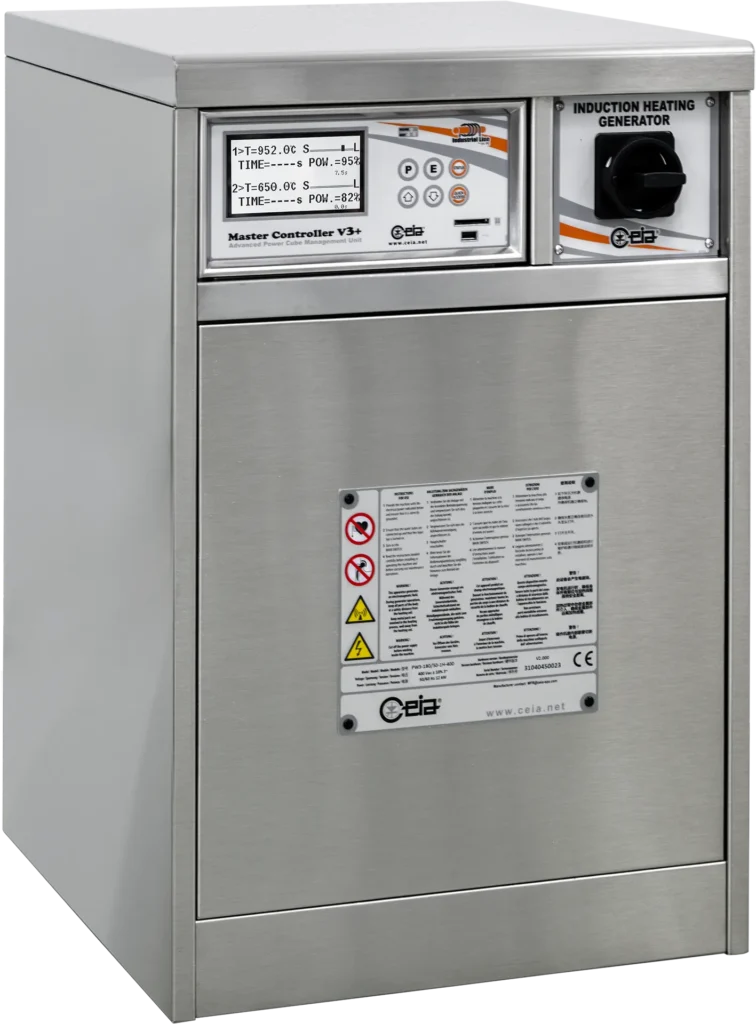
Power Cube Series 50 Generators
The 50 series is the State-of-the-Art in Medium Frequency Generators available in the market. This family combine the miniaturized CEIA Heating Head solution (patented) with a powerful, continuous-duty rated generator with so high efficiency that it can replace traditional generators in applications up to double input power, thus cutting the initial investment and operating costs.