

Induction Heating Applications
Induction curing
Induction curing is a specialized process that leverages localized electromagnetic heating to initiate and control chemical and molecular transformations within polymer-based materials. These versatile materials — including epoxies, phenolics, polyesters, and silicones — are widely used for bonding, sealing, coating, insulating, and protecting components across a broad range of industrial products.
How Induction Curing Works
CEIA induction heating systems (induction heaters), which include various induction coil designs such as the induction heating coil (often part of an induction coil heater), are extensively used for curing applications — particularly within the automotive industry and in the manufacturing of electrical power cables. The ability to precisely apply heat exactly where required, combined with fast cycle times and accurate temperature regulation, positions induction curing as an ideal solution for high-throughput, quality-critical environments.
Why Choose Induction Curing?
In stark contrast to conventional curing methodologies that necessitate heating entire assemblies or protracted oven exposure, this induction curing process delivers targeted, on-demand heat. This inherently minimizes thermal stress imparted to surrounding materials and sensitive components, thereby significantly enhancing overall energy efficiency and robustly supporting both automation and inline production workflows.
This process delivers a multitude of advantages:
- Enhanced Repeatability – Consistent results across production runs
- Stable Power Output – Reliable performance cycle after cycle
- Precisely Localized Heating – Energy directed only where needed
- Robust Thermal Regulation – Accurate control throughout the cure cycle
Collectively, these attributes contribute to accelerated production cycles, substantial energy conservation, and improved quality control of the finished product.
Industrial Applications
Induction curing technology is extensively utilized across:
- Automotive Industry – Curing adhesives in critical structural joints
- Electrical Power Cable Manufacturing – Solidifying insulating layers in high-performance cables
Induction Curing Technology
The intrinsic capability of induction heat curing to precisely apply heat where required, coupled with exceptionally fast cycle times and accurate temperature regulation, unequivocally positions induction curing as an ideal solution for high-throughput, quality-critical operational environments.
Advanced CEIA Induction Systems
CEIA induction heating systems (induction heaters), which include various induction coil designs such as the induction heating coil (often part of an induction coil heater), are extensively utilized for various induction curing applications.
Why Choose CEIA for Induction Curing?
Whether applied for curing adhesives in critical structural joints or for solidifying insulating layers in high-performance electrical cables, CEIA’s induction curing technology furnishes manufacturers with a clean, highly efficient, and scalable solution for consistently achieving superior results in their applications.
Frequently Asked Questions
What is induction curing and how does it work?
Induction curing uses localized electromagnetic heating to trigger the chemical reactions that harden polymer-based materials such as epoxies, phenolics, polyesters and silicones. An induction coil shapes the field so heat is generated only in the target area. This gives on-demand, controlled curing of adhesives, coatings and insulating layers.
Induction curing vs oven curing: which is better?
Induction curing is better when you need targeted, fast, energy-efficient curing, because it heats only the area that needs it instead of the whole assembly or oven chamber. That reduces thermal stress on surrounding materials, shortens cycle times and lowers energy use. Ovens still suit bulk curing of whole assemblies.
What are the advantages of induction curing?
The main advantages are precisely localized heating, repeatable results, stable power output and tight thermal control throughout the cure cycle. Together these deliver consistently cured bonds, coatings and insulation, shorter cycle times, lower energy consumption and a cleaner process with no oven to heat.
What is induction curing used for in automotive and cable manufacturing?
In automotive manufacturing, induction curing cures adhesives in structural joints, where a fully cured bond is essential to strength and safety. In cable manufacturing, it solidifies the insulating layers of high-performance electrical power cables. Both uses depend on consistent, repeatable heating.
Can induction curing be automated for high-volume production?
Yes. Induction curing suits automated, inline, high-throughput production because its heating profile is precise and repeatable, with fast cycle times and accurate temperature regulation. Coil design is tailored to the joint, coating or insulating layer, so every part gets the same cure quality.
Preferred Products
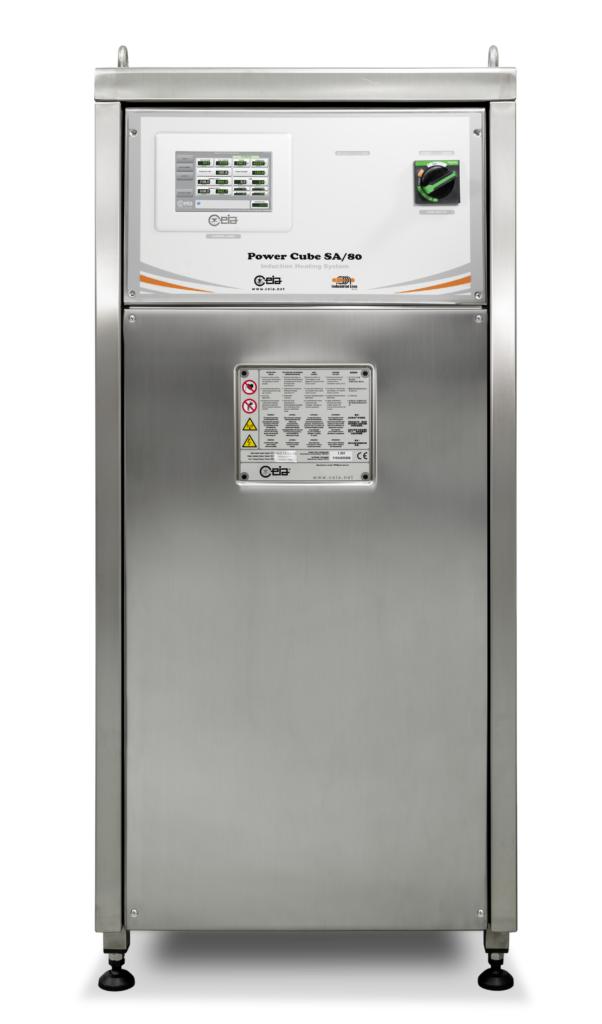
Power Cube SA/80 Series
The SA/80 Generator Series is a high power induction unit in a very compact size with embedded advanced microprocessor based control software and state-of-the-art electronics. This allows very high efficiencies (>96%) under a wide variety of workload conditions while maintaining precise, stable and repeatable output power.
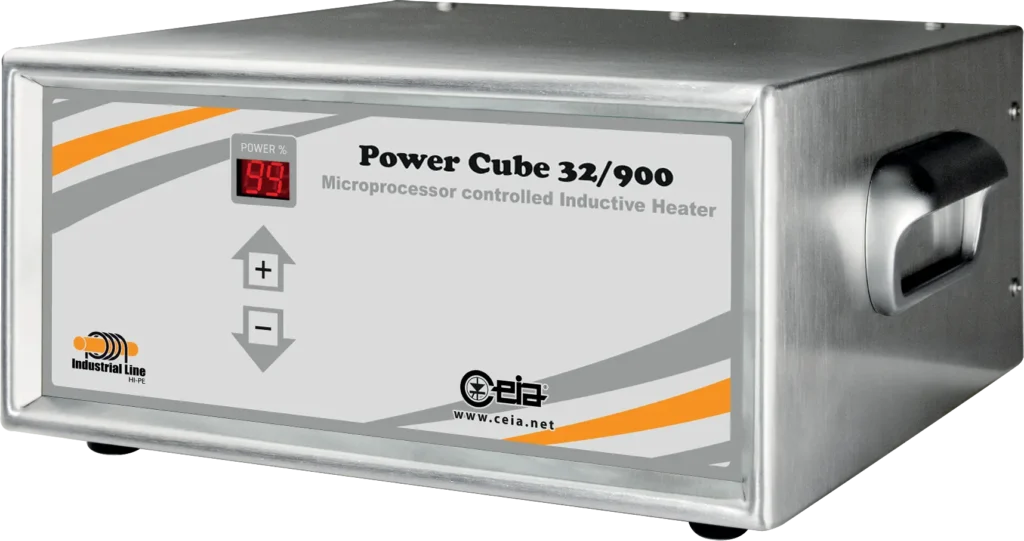
Power Cube Series 900 Generators
The 900 HI-PE series of High Frequency Generators spans five models with a power rating range of 2.8 to 6 kW. They combine the miniaturized CEIA Heating Head solution (patented) with a powerful, continuous-duty rated generator with so high efficiency that it can replace traditional generators in applications up to 12kW, thus cutting the initial investment and operating costs.