

Induction Heating Applications
Tin Soldering
Tin soldering is a critical process in modern industrial manufacturing, requiring high precision, controlled heat application, and consistent repeatability—especially when working with delicate electronic components and intricate assemblies.
Achieving reliable solder joints depends on the accurate control of temperature, solder volume, and timing throughout the process. Even minor variations can impact joint strength, electrical conductivity, and overall product quality.
Why Precision Soldering Matters
In high-performance industries, soldering quality directly affects product reliability. Our advanced soldering solutions ensure:
- Consistent Joint Quality across high-volume production
- Precise Heat Control to protect sensitive components
- Accurate Solder Deposition for clean, reliable connections
- High Repeatability for automated manufacturing environments
- Enhanced Electrical Conductivity and long-term performance
Industrial Applications
Our tin soldering systems are widely used in:
- Electronics Manufacturing – PCB assemblies and micro-components
- Automotive Industry – Sensors, wiring, and control systems
-
Electrical Components – Connectors, terminals, and circuits
Advanced Induction Soldering Technology
Our systems leverage induction heating technology to deliver superior soldering performance. Key advantages include:
- Localized, controlled heating for precision work
- Reduced thermal stress on surrounding materials
- Faster processing times for improved productivity
- Clean and efficient operation
CEIA Induction Soldering Systems
CEIA’s induction soldering solutions are engineered for high-precision industrial applications, offering:
-
Closed-loop control systems for accurate temperature regulation
-
Automated solder feed mechanisms for consistent material flow
-
Fully programmable parameters for process flexibility
-
Exceptional repeatability for mass production environments
900 Series Soldering Platform
The CEIA 900 Series represents a cutting-edge soldering solution designed for demanding industrial use. Key features include:
-
Compact, patented solid-state generators
-
Dedicated control units for precise operation
-
Integration with wire-fed solder applicators
-
Energy efficiency exceeding 95%
-
Highly repeatable heat delivery for consistent joint formation
This platform ensures reliable, high-quality solder joints while optimizing production efficiency and energy consumption.
Your Partner in Precision Soldering
Whether you require induction soldering systems, automated soldering solutions, or high-reliability joint formation, our expertise ensures:
-
Superior process control
-
Consistent product quality
-
Scalable manufacturing solutions
Frequently Asked Questions
What is tin soldering and how does it work?
Tin soldering is a metal-joining process that forms electrical and mechanical connections by melting a filler metal below 450°C (842°F) into the joint. It’s used mainly in electronics and precision assemblies. Reliable joints depend on accurate control of temperature, solder volume and timing.
What is induction soldering and why choose it over conventional methods?
Induction soldering uses induction heating to bring the joint to soldering temperature, applying heat only where it’s needed. That protects nearby components and cuts thermal stress. It’s also faster and far more repeatable than manual soldering, which makes it well suited to automated production.
Soldering vs brazing: what's the difference?
The difference is the filler metal’s melting point. Soldering uses fillers below 450°C, while brazing uses higher-temperature fillers. Soldering suits delicate electronic components, while brazing suits structural, load-bearing joints with greater strength and heat stability.
How do you get consistent, high-quality solder joints in production?
Consistency comes from closed-loop temperature control, automated solder feed and programmable process parameters. Each joint gets the same heat cycle and the same solder volume, giving clean, repeatable connections. Properly formed joints also deliver better electrical conductivity and long-term reliability, while poor joints cause resistance, intermittent contact and early failure.
Is Induction tool brazing suitable for automated, high-volume production?
Yes. Localized, precisely controlled heating protects heat-sensitive components while still forming a sound joint, and high repeatability suits automated lines. The same process control scales from prototypes to full production, and systems with high energy efficiency lower operating costs.
Preferred Products
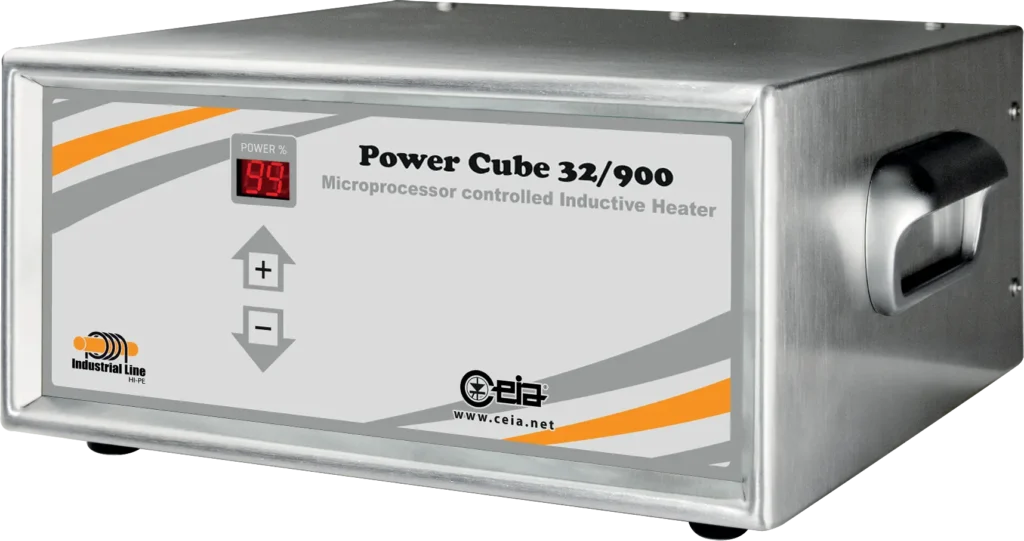
Power Cube Series 900 Generators
The 900 HI-PE series of High Frequency Generators spans five models with a power rating range of 2.8 to 6 kW. They combine the miniaturized CEIA Heating Head solution (patented) with a powerful, continuous-duty rated generator with so high efficiency that it can replace traditional generators in applications up to 12kW, thus cutting the initial investment and operating costs.