

Induction Heating Applications
Tool Brazing
Tool brazing is a specialized metal-joining process engineered for the secure affixation of cutting inserts, carbide tips, or hardened steels to tool bodies such as drills, saw blades, or milling cutters.
The paramount objective is to forge a mechanically strong, highly durable joint capable of resiliently withstanding significant mechanical stress and severe thermal loads encountered during operational use. This specific brazing process is crucial for tool longevity. What is brazing in this context refers to this specialized technique.
How Brazing Differs From Welding?
Fundamentally distinct from welding, brazing does not involve the fusion of the base materials. Instead, it meticulously employs a filler metal that flows into the joint interfaces via capillary action, typically at a melting point ranging between 600°C and 1200°C.
This methodology ensures high joint integrity for industrial tools while meticulously preserving the metallurgical properties of both the cutting material and the tool body. This process exemplifies what is a braze.
| Joining principle | Filler metal drawn into the joint by capillary action, base materials are not fused |
|---|---|
| Typical filler melting range | 600°C to 1200°C |
| Base material condition | Metallurgical properties of the cutting material and tool body are preserved |
| Typical components | Drills, saw blades, milling cutters, carbide tipped and insert based tooling |
Why Precision Heat Control Matters?
Precision in heat application is absolutely essential. The heat must be applied rapidly and with extreme localization to prevent compromising the temper of the tool or inducing undesirable internal stresses.
Induction heating is optimally suited for tool brazing due to its intrinsic capability for rapid, precisely targeted heating combined with high repeatability and minimal thermal distortion. Furthermore, it facilitates consistent quality across entire production batches, which is critically important in industries where tool performance and longevity directly impact manufacturing efficiency and cost.
Rapid, localized heating
Heat is delivered exactly where the joint requires it, protecting the temper of the tool body.
Minimal thermal distortion
Controlled energy input limits undesirable internal stresses across the component.
High repeatability
Consistent heating cycles hold quality steady across entire production batches.
Process efficiency
Tool performance and longevity translate directly into manufacturing efficiency and cost.
CEIA Induction Systems for Tool Brazing
CEIA’s induction systems, which often integrate an induction coil or induction heating coil as part of the design of an induction heater, are frequently selected for tool brazing applications due to their compact physical design, precise power control capabilities, and outstanding energy efficiency.
- Compact physical design that fits into existing production layouts
- Precise power control across the full heating cycle
- Outstanding energy efficiency in continuous operation
- Integrated induction coil configurations matched to the joint geometry
Frequently Asked Questions
What is tool brazing and how does it work?
Tool brazing is a metal-joining process that attaches carbide tips, cutting inserts or hardened steel to tool bodies such as drills, saw blades and milling cutters. A filler metal melts at roughly 600°C to 1200°C and flows into the joint by capillary action. The base materials never melt, so the joint is strong without damaging the tool.
Brazing vs welding: which is better for cutting tools?
Brazing is better for cutting tools because it doesn’t melt the base materials, while welding fuses them. Welding heat can ruin the temper of hardened steel and carbide. Brazing melts only the filler metal, preserving the hardness and metallurgical properties that tool performance depends on.
Why is induction heating the best method for brazing tools?
Induction heating is ideal for tool brazing because it delivers rapid, highly localized heat with high repeatability and minimal thermal distortion. Heat stays at the joint, protecting the tool body’s temper and dimensional accuracy. Consistent heating cycles also keep joint quality uniform across large production batches.
What causes weak or failed brazed joints on carbide tools, and how do you prevent them?
Weak brazed joints are usually caused by inconsistent heating, poorly localized heat, uncontrolled filler flow or overheating. Prevention comes from precise power control, an induction coil matched to the joint geometry, and a control unit that keeps the heating cycle repeatable, which also reduces localized overheating.
Is Induction tool brazing suitable for automated, high-volume production?
Yes. Induction tool brazing suits automated, high-volume production because consistent heating cycles keep joint quality the same from the first part to the last. Compact systems fit existing production lines, and precise power control and energy efficiency lower cost per tool. This works for both carbide and hardened steel components.
Preferred Products
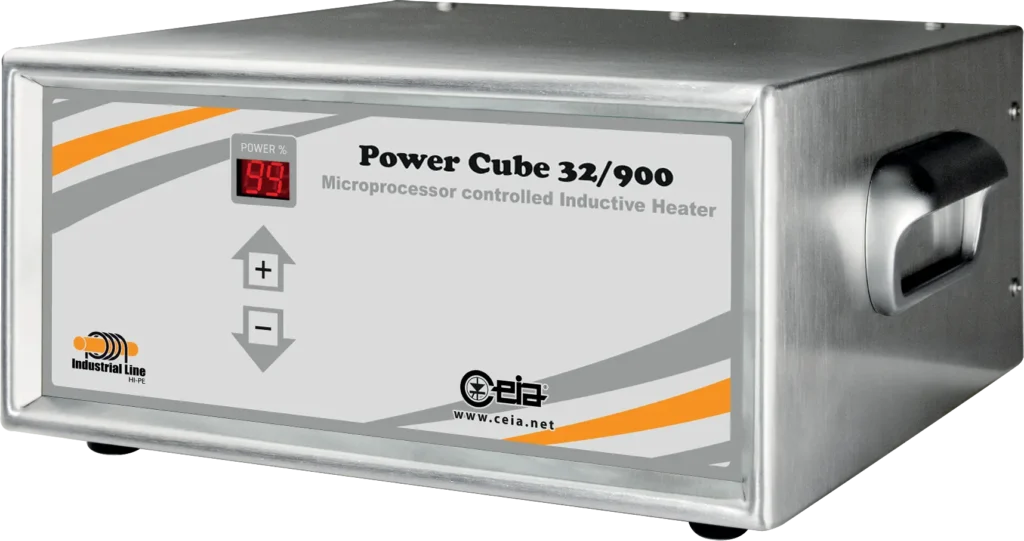
Power Cube Series 900 Generators
The 900 HI-PE series of High Frequency Generators spans five models with a power rating range of 2.8 to 6 kW. They combine the miniaturized CEIA Heating Head solution (patented) with a powerful, continuous-duty rated generator with so high efficiency that it can replace traditional generators in applications up to 12kW, thus cutting the initial investment and operating costs.
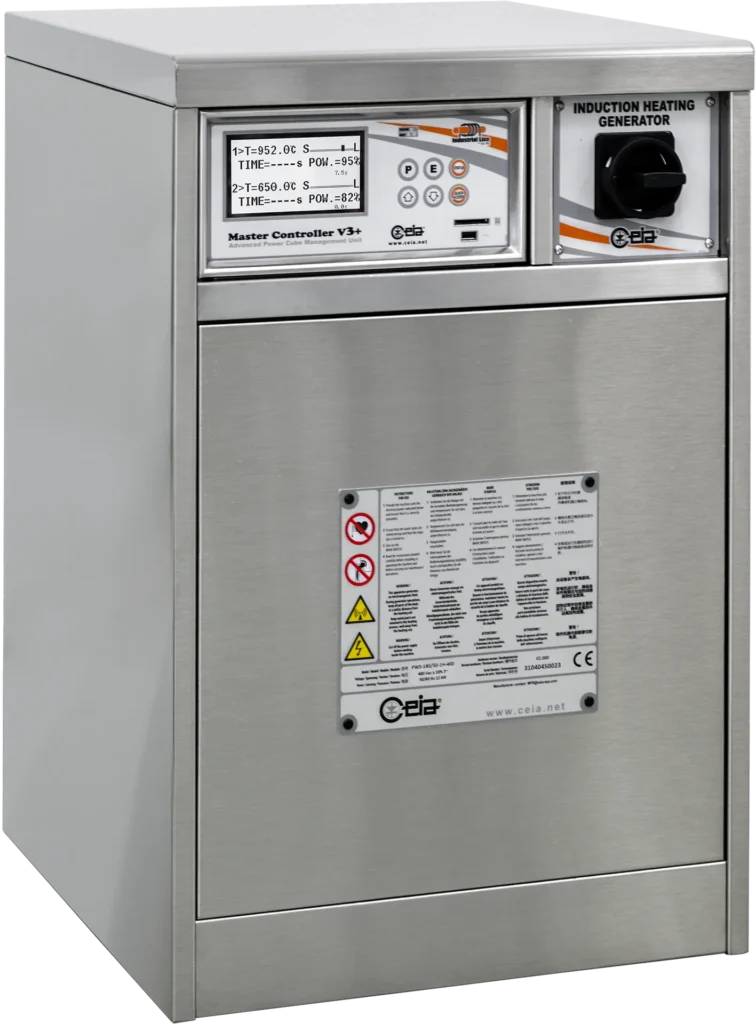
Power Cube Series 200 Generators
The 200 series is the state-of-the-art in medium-high frequency generators available in the market. This family combine the miniaturized CEIA Heating Head solution (patented) with a powerful, continuous-duty rated generator with so high efficiency that it can replace traditional generators in applications up to double input power, thus cutting the initial investment and operating costs.
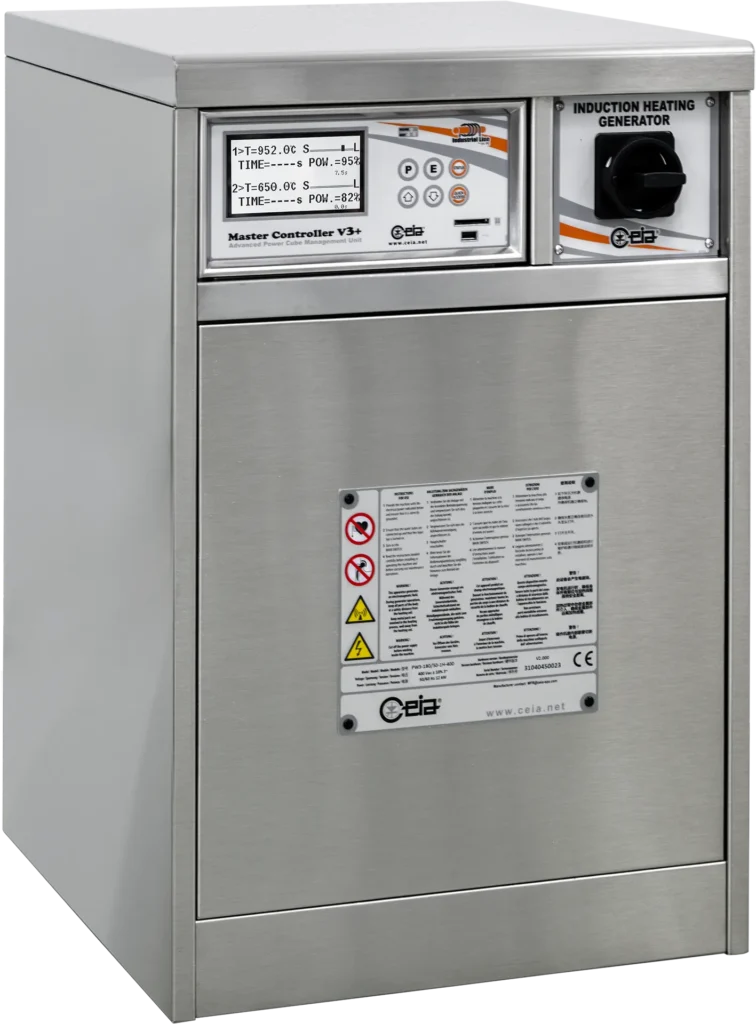
Power Cube Series 50 Generators
The 50 series is the State-of-the-Art in Medium Frequency Generators available in the market. This family combine the miniaturized CEIA Heating Head solution (patented) with a powerful, continuous-duty rated generator with so high efficiency that it can replace traditional generators in applications up to double input power, thus cutting the initial investment and operating costs.