

Induction Heating Applications
Warm Forming
Warm forming is a controlled metal shaping process executed at intermediate temperatures, typically spanning 200°C to 1200°C. Metallic materials are heated sufficiently to significantly reduce their deformation resistance, yet precisely controlled to prevent substantial grain growth or detrimental oxidation. This technique bridges the operational gap between conventional cold forming and hot forming, offering improved material formability, reduced springback, and enhanced dimensional accuracy of the final component.
Industrial Applications
Warm forming technology is extensively implemented across:
- Automotive Industry – Efficient production of complex, lightweight components
- Aerospace Engineering – Exceptional surface quality for precision components
- Appliance Manufacturing – Complex component forming at scale
Why Choose Induction Heating for Warm Forming?
Induction heating is an ideal thermal solution for warm forming applications because it delivers:
- Rapid Heating – Minimizes cycle time in high-throughput production
- Highly Localized Heating – Targets only the required zone, limiting thermal impact elsewhere
- Precise Temperature Control – Maintains the narrow window needed to avoid grain growth or oxidation
Advanced CEIA Induction Heating Systems
CEIA induction heating systems are commonly deployed in these demanding warm metal forming applications, highly regarded for their:
- Superior Energy Efficiency
- Intrinsic Repeatability
- Seamless Integration Capabilities within automated production lines
Why Choose CEIA for Warm Forming?
Whether you require induction warm forming solutions for high-strength steel or aluminium alloy components, CEIA’s induction technology delivers precise, repeatable thermal control suited to demanding production environments.
Frequently Asked Questions
What is warm forming and how does it work?
Warm forming is a metal shaping process performed at intermediate temperatures, typically between 200°C and 1200°C, where the metal is heated enough to lower its resistance to deformation. The temperature is kept controlled so the material avoids substantial grain growth and oxidation. The result is easier forming and better dimensional accuracy than cold forming.
Warm forming vs cold forming vs hot forming: what's the difference?
The difference is temperature. Cold forming shapes metal near room temperature and needs higher forces, hot forming uses much higher temperatures, and warm forming sits between the two. Cold forming often causes more springback. Hot forming can cause grain growth and oxidation. Warm forming improves formability and dimensional accuracy while avoiding both drawbacks.
What is springback and how does warm forming reduce it?
Springback is the tendency of formed metal to partly return to its original shape after the forming force is removed. Heating the metal into the warm forming range lowers its resistance to deformation, which reduces springback and improves final dimensional accuracy.
Why is induction heating well suited to warm forming, and how is temperature controlled?
Induction heating suits warm forming because it heats rapidly, targets only the required zone and holds temperature precisely within the narrow warm forming window. That protects the material from grain growth and oxidation caused by overheating. Control units keep heating cycles consistent and temperature uniform, even across complex geometries.
Which industries and materials use warm forming?
Warm forming is used in automotive for complex, lightweight components, in aerospace for precision parts with high surface-quality demands, and in appliance manufacturing for complex components at scale. It works with high-strength steel and aluminium alloys, and rapid induction heating keeps cycle times short enough for high-volume production.
Preferred Products
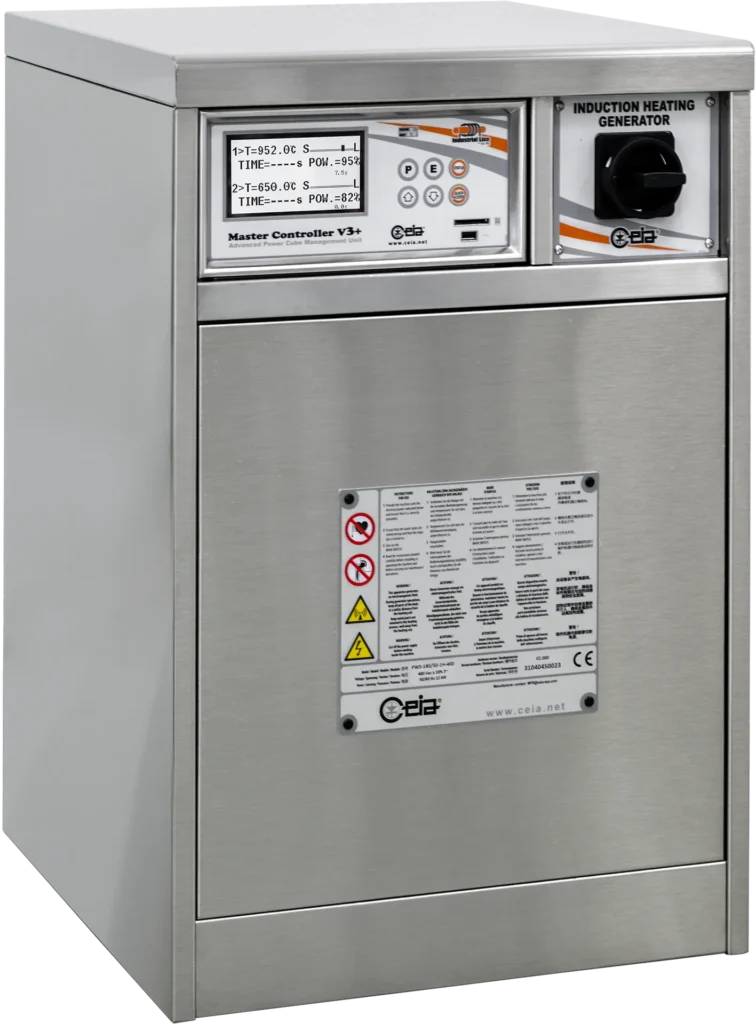
Power Cube Series 200 Generators
The 200 series is the state-of-the-art in medium-high frequency generators available in the market. This family combine the miniaturized CEIA Heating Head solution (patented) with a powerful, continuous-duty rated generator with so high efficiency that it can replace traditional generators in applications up to double input power, thus cutting the initial investment and operating costs.
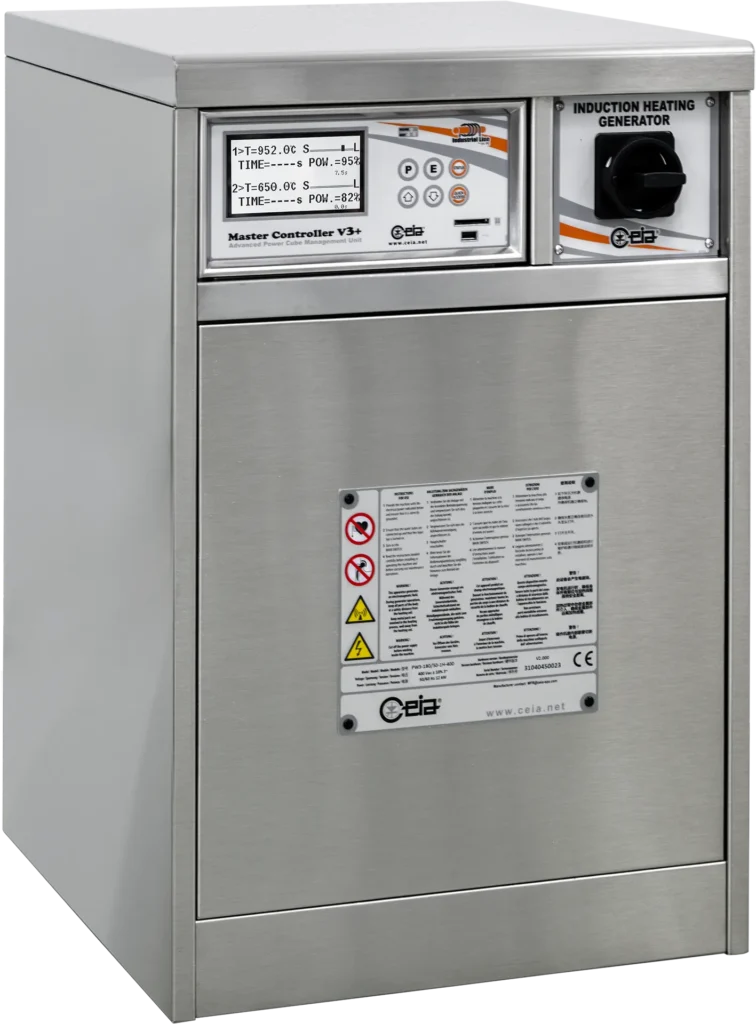
Power Cube Series 50 Generators
The 50 series is the State-of-the-Art in Medium Frequency Generators available in the market. This family combine the miniaturized CEIA Heating Head solution (patented) with a powerful, continuous-duty rated generator with so high efficiency that it can replace traditional generators in applications up to double input power, thus cutting the initial investment and operating costs.
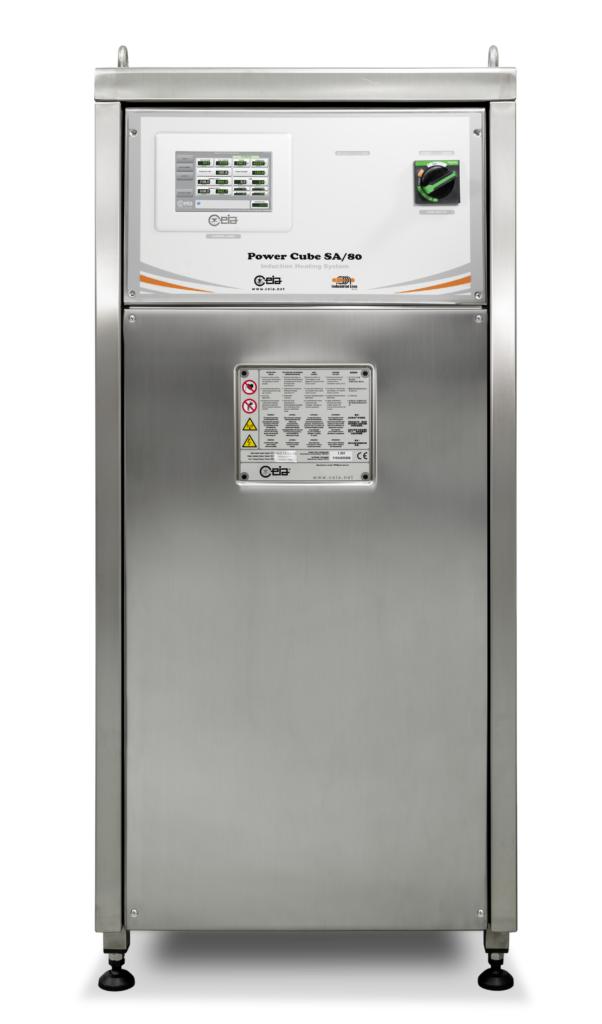
Power Cube SA/80 Series
The SA/80 Generator Series is a high power induction unit in a very compact size with embedded advanced microprocessor based control software and state-of-the-art electronics. This allows very high efficiencies (>96%) under a wide variety of workload conditions while maintaining precise, stable and repeatable output power.